Nafeesa Parveen
A person overwhelmed by social media notifications on smartphone and laptop, illustrating how excessive use of social media can harm mental health and well-being
what is social media
Introduction
Social media has become an integral part of our daily lives. Platforms like Facebook, Instagram, Twitter, TikTok, and YouTube connect billions of people worldwide. But as much as social media has benefits—such as connecting friends and family, spreading information, and creating communities—it also has a darker side. Excessive use of social media can affect mental health, emotional well-being, and even physical health.
In this article, we will explore:
- What social media really is
- How it affects mental health
- Negative consequences of overuse
- Tips to use social media safely
- Ways to improve your digital well-being
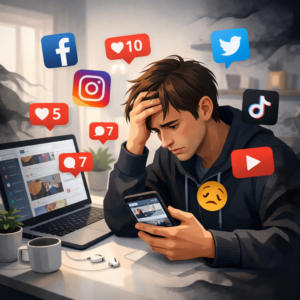
A person overwhelmed by social media notifications on smartphone and laptop, illustrating how excessive use of social media can harm mental health and well-being
1. What Is Social Media?
what is social media? Social media refers to online platforms and apps that allow people to create, share, or interact with content and communities. Unlike traditional media like TV or newspapers, social media is interactive and allows instant feedback and engagement.
Key Features of Social Media & what is social media
- Profiles: Personal or business profiles representing individuals or organizations
- Sharing: Photos, videos, text posts, articles, and stories
- Networking: Connecting with friends, family, or like-minded people
- Comments & Reactions: Instant feedback through likes, shares, and comments
- Groups & Communities: Join groups based on interests, hobbies, or causes
Popular Social Media Platforms & what is social media
- Facebook: Connecting friends, family, communities
- Instagram: Visual content like photos and short videos
- Twitter / X: Microblogging and updates in real-time
- TikTok: Short-form video content
- YouTube: Long-form video content
- LinkedIn: Professional networking
- Snapchat: Disappearing stories and messaging
Social media is no longer just a leisure tool—it’s used for business, learning, networking, and entertainment. But its constant use comes with risks.
https://admavrixnews.com/
2. How Social Media Affects Mental Health – what is social media
Studies have shown that social media can have both positive and negative effects on mental health. The impact largely depends on how you use it.
2.1 Positive Effects
- Staying connected: Helps people maintain relationships over distance
- Access to support groups: Communities for mental health, chronic illness, or hobbies
- Learning opportunities: Educational videos, blogs, and tutorials
- Self-expression: Posting content or creativity boosts confidence
While these benefits exist, the negative effects can outweigh the positives when used excessively.
2.2 Negative Effects
2.2.1 Anxiety and Depression
- Excessive scrolling increases feelings of anxiety and depression
- Comparison with others’ curated lifestyles can lead to low self-esteem
- Notifications and constant alerts create stress and pressure
Example: Seeing friends’ perfect vacation photos might make a person feel “left out” or inadequate.
2.2.2 Social Media Addiction
- People spend hours mindlessly scrolling
- Triggers like notifications and likes release dopamine, creating a “habit loop”
- Addiction affects sleep, productivity, and focus
Fact: Research shows teenagers spend up to 3–4 hours a day on social media, increasing stress and anxiety.
2.2.3 Sleep Disturbances
- Using social media at night affects sleep patterns
- Blue light exposure reduces melatonin, making it harder to sleep
- Poor sleep leads to fatigue, irritability, and decreased mental health
2.2.4 Cyberbullying
- Online harassment, trolling, and negative comments
- Can lead to depression, anxiety, and self-harm
- Children and teenagers are especially vulnerable
2.2.5 Fear of Missing Out (FOMO)
- Seeing others’ posts constantly can create FOMO
- Leads to compulsive checking and mental stress
2.2.6 Low Self-Esteem and Body Image Issues
- Instagram and TikTok emphasize visual content
- Filters, editing apps, and influencer lifestyles create unrealistic standards
- Young adults may feel dissatisfied with their appearance
3. Why Social Media Can Be Harmful – what is social media
- Overuse: Spending hours online reduces real-life interactions
- Comparison trap: Always comparing yourself with others
- Addictive features: Notifications, likes, and infinite scrolling
- Mental overload: Constant exposure to news, drama, or negative content
- Privacy risks: Sharing personal information can have security consequences
In short, social media is not inherently bad—but misuse and excessive time spent online make it harmful.
4. Signs You May Be Using Social Media Too Much
- Feeling anxious or upset when not online
- Constantly checking notifications
- Neglecting work, studies, or personal relationships
- Reduced sleep or irregular sleep patterns
- Feeling unhappy or stressed after scrolling
If you notice these signs, it’s time to reassess your social media habits.
5. Tips to Use Social Media Safely
5.1 Set Time Limits
- Use apps like Screen Time (iOS) or Digital Wellbeing (Android)
- Limit daily usage to 30–60 minutes per platform
5.2 Be Mindful of Content
- Follow accounts that inspire and motivate
- Unfollow accounts that trigger anxiety or comparison
5.3 Take Regular Breaks
- Try digital detox days
- Avoid using phones 1–2 hours before bedtime
5.4 Engage Meaningfully
- Interact positively rather than mindlessly scrolling
- Post content with purpose, not just for validation
5.5 Protect Your Mental Health
- Seek professional help if social media is causing depression or anxiety
- Join support groups for digital well-being
6. How to Improve Your Mental Health While Using Social Media
- Practice Gratitude: Focus on personal achievements rather than comparisons
- Balance Online & Offline Life: Spend time with family, friends, and hobbies
- Exercise & Nutrition: Physical health supports mental health
- Mindfulness: Meditation apps can reduce anxiety triggered by online activity
7. Benefits of Mindful Social Media Use
- Staying informed and connected
- Networking opportunities for career growth
- Creativity through content creation
- Learning and self-improvement
Mindful social media use allows you to gain benefits without harming mental health.
8. Social Media Addiction: How to Break the Cycle
- Delete unnecessary apps
- Turn off push notifications
- Use app timers
- Replace scrolling with productive activities
- Track usage patterns
Breaking the cycle improves focus, sleep, and overall well-being.
9. The Role of Parents and Educators – what is social media
- Monitor children’s screen time
- Educate teens about online risks
- Encourage offline social activities
- Promote discussion about mental health
10. Conclusion – what is social media
what is social media? Social media is a double-edged sword. While it connects people, spreads knowledge, and allows self-expression, it can also harm mental health if used excessively or without awareness.
Key takeaways:
- Understand what is social media
- Recognize the negative effects on mental health
- Practice mindful and balanced usage
- Take breaks and seek support when needed
By being conscious of your social media habits, you can enjoy the benefits without falling victim to its harmful effects.
About The Author