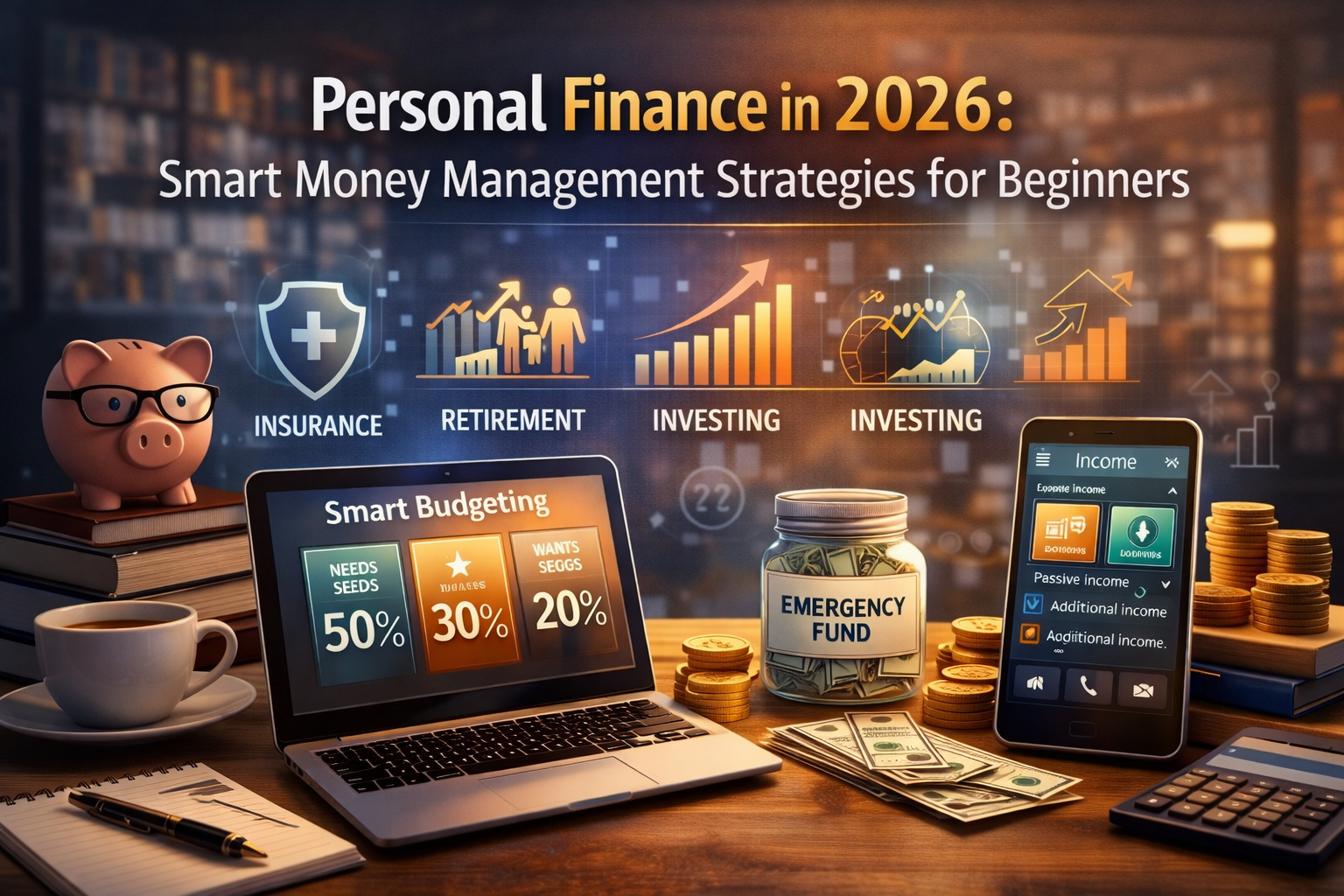
A professional financial planning concept image representing Personal Finance in 2026, highlighting budgeting methods, emergency savings, investment growth, insurance protection, and retirement planning for beginners aiming to build long-term wealth. 💰📈
Personal Finance in 2026: Smart Money Management Strategies for Beginners
Managing money has become both easier and more complicated in today’s digital world. With AI-powered banking apps, instant UPI payments, digital investments, and global economic changes, beginners must understand how to handle money wisely. Personal Finance in 2026 is no longer just about saving a small portion of your salary — it’s about strategic planning, smart investing, debt control, and long-term wealth creation.
This detailed guide will help beginners understand every important concept step by step. By the end of this article, you will have a clear roadmap to manage your income, control expenses, grow investments, and secure your financial future confidently.
1. What is Personal Finance?
Before diving deeper, let’s understand the meaning of personal finance.
Personal finance refers to managing your income, expenses, savings, investments, insurance, taxes, and retirement planning. It focuses on helping individuals achieve financial stability and long-term wealth.
In Personal Finance in 2026, technology plays a huge role. Mobile banking apps, AI budgeting tools, and automated investment platforms are helping beginners make smarter decisions faster than ever before.
2. Why Personal Finance is More Important Than Ever in 2026
The financial environment has changed significantly due to:
- Rising inflation
- Digital payment systems
- Online investment platforms
- Gig economy jobs
- AI-driven financial tools
Because of these changes, Personal Finance in 2026 requires financial awareness and adaptability. If you don’t manage money properly, expenses can quickly exceed income due to lifestyle inflation and easy credit availability.
Financial literacy is no longer optional — it’s essential.
3. Step 1: Understanding Your Income
Your income is the foundation of your financial plan.
Types of Income:
- Active Income (salary, freelance work)
- Passive Income (rent, dividends, royalties)
- Side Income (online business, content creation)
In Personal Finance in 2026, many beginners earn from multiple income streams such as freelancing, digital marketing, affiliate income, and online businesses.
Action Steps:
- Calculate total monthly income.
- Separate fixed and variable income.
- Identify potential new income sources.
Understanding income gives clarity for planning savings and investments.
4. Step 2: Smart Budgeting Strategy
Budgeting is the backbone of Personal Finance in 2026.
A budget helps you:
- Control spending
- Increase savings
- Avoid unnecessary debt
- Track financial progress
50/30/20 Rule (Beginner Friendly)
- 50% Needs (rent, food, bills)
- 30% Wants (shopping, entertainment)
- 20% Savings & Investments
However, in 2026, you can also use AI budgeting apps that track spending automatically.
Zero-Based Budget
Every rupee has a job. Income minus expenses should equal zero.
Budgeting builds discipline and financial awareness.
5. Step 3: Building an Emergency Fund
Life is unpredictable. Job loss, medical emergencies, or unexpected expenses can disturb your finances.
Emergency Fund Rule:
- Save 3–6 months of living expenses.
- Keep it in a high-interest savings account or liquid fund.
In Personal Finance in 2026, emergency funds are more critical due to job market fluctuations and gig economy instability.
This fund gives financial peace and security.
6. Step 4: Managing Debt Smartly
Debt can be useful or harmful depending on how you manage it.
Good Debt:
- Education loan
- Home loan
- Business loan
Bad Debt:
- Credit card debt
- Personal loan for lifestyle spending
In Personal Finance in 2026, digital lending apps make loans easily accessible — but high interest rates can trap beginners.
Strategies:
- Pay high-interest debt first.
- Avoid minimum credit card payments.
- Maintain a healthy credit score.
Debt management protects your financial future.
7. Step 5: Smart Saving Techniques
Saving is the starting point of wealth building.
Saving Tips:
- Automate savings.
- Increase savings with salary growth.
- Cut unnecessary subscriptions.
- Track daily expenses.
In Personal Finance in 2026, automation tools allow auto-transfer of money into savings or investment accounts.
The key principle: Pay yourself first.
8. Step 6: Introduction to Investing
Saving protects money; investing grows money.
Investment Options in 2026:
- Stocks
- Mutual Funds
- ETFs
- Index Funds
- Bonds
- Real Estate
- Digital Assets
For beginners in Personal Finance in 2026, starting with index funds or SIP (Systematic Investment Plan) is considered safe and disciplined.
Golden Rules:
- Start early.
- Invest regularly.
- Think long-term.
- Diversify portfolio.
Compounding works best with time.
9. Step 7: Retirement Planning for Beginners
Many young people ignore retirement planning. That’s a mistake.
In Personal Finance in 2026, retirement planning starts early due to increasing life expectancy.
Options:
- EPF / PPF
- NPS
- Mutual Funds
- Retirement plans
Even small monthly investments grow significantly over 20–30 years.
10. Step 8: Insurance Planning
Insurance protects wealth.
Types:
- Health Insurance
- Life Insurance (Term Plan)
- Vehicle Insurance
- Property Insurance
Without insurance, one emergency can destroy savings.
In Personal Finance in 2026, digital comparison platforms make it easier to choose affordable policies.
11. Step 9: Tax Planning Basics
Tax planning helps reduce financial burden legally.
Tips:
- Use tax-saving investments.
- Claim deductions.
- Maintain proper documentation.
- Plan investments before financial year-end.
Proper tax planning improves overall financial growth.
12. Step 10: Building Multiple Income Streams
In 2026, relying on one income source is risky.
Options:
- Freelancing
- Online courses
- Blogging
- Affiliate marketing
- Dividend investing
Multiple income streams strengthen financial security.
13. Financial Mistakes Beginners Must Avoid
- No budgeting
- Ignoring emergency fund
- Overspending on lifestyle
- Investing without research
- Following social media investment hype
Avoiding mistakes is equally important in Personal Finance in 2026.
14. Role of Technology in Personal Finance
Technology has transformed money management.
Tools Available:
- AI financial advisors
- Robo-advisors
- Automated SIP
- Expense tracking apps
- Digital wallets
Technology makes Personal Finance in 2026 smarter, faster, and data-driven.
15. Financial Discipline & Mindset
Money management is 80% behavior and 20% knowledge.
Good Habits:
- Delayed gratification
- Regular review of finances
- Goal-based investing
- Continuous learning
A disciplined mindset ensures long-term success.
16. Creating Short-Term & Long-Term Goals
Short-Term Goals:
- Vacation
- Gadget purchase
- Emergency fund
Long-Term Goals:
- House
- Child education
- Retirement
Goal-based planning improves clarity and motivation.
How Content Marketing Works in 2026: A Complete Beginner’s Guide
Digital marketing is evolving rapidly. Traditional advertising is losing trust, paid ads are becoming more expensive, and audiences are demanding value before making purchasing decisions.
17. How Inflation Affects Your Money
Inflation reduces purchasing power.
If inflation is 6% and your savings earn 3%, you are losing money.
That’s why investing is necessary in Personal Finance in 2026.
18. Beginner-Friendly Financial Plan (Step-by-Step)
- Calculate income.
- Create monthly budget.
- Build emergency fund.
- Clear high-interest debt.
- Start SIP investment.
- Buy insurance.
- Plan retirement.
- Review annually.
This roadmap makes Personal Finance in 2026 simple and practical.
19. Psychological Side of Money
Emotions affect spending.
Common behaviors:
- Impulse buying
- Fear-based investing
- Herd mentality
Financial awareness improves emotional control.
20. Final Thoughts
Money management is not about being rich instantly. It’s about building stability step by step.
Personal Finance in 2026 is about:
- Smart budgeting
- Strategic investing
- Risk management
- Technology usage
- Financial discipline
If beginners follow structured planning, avoid common mistakes, and invest consistently, financial freedom becomes achievable.
Start today. Start small. Stay consistent.
Your financial future depends on the actions you take now.